
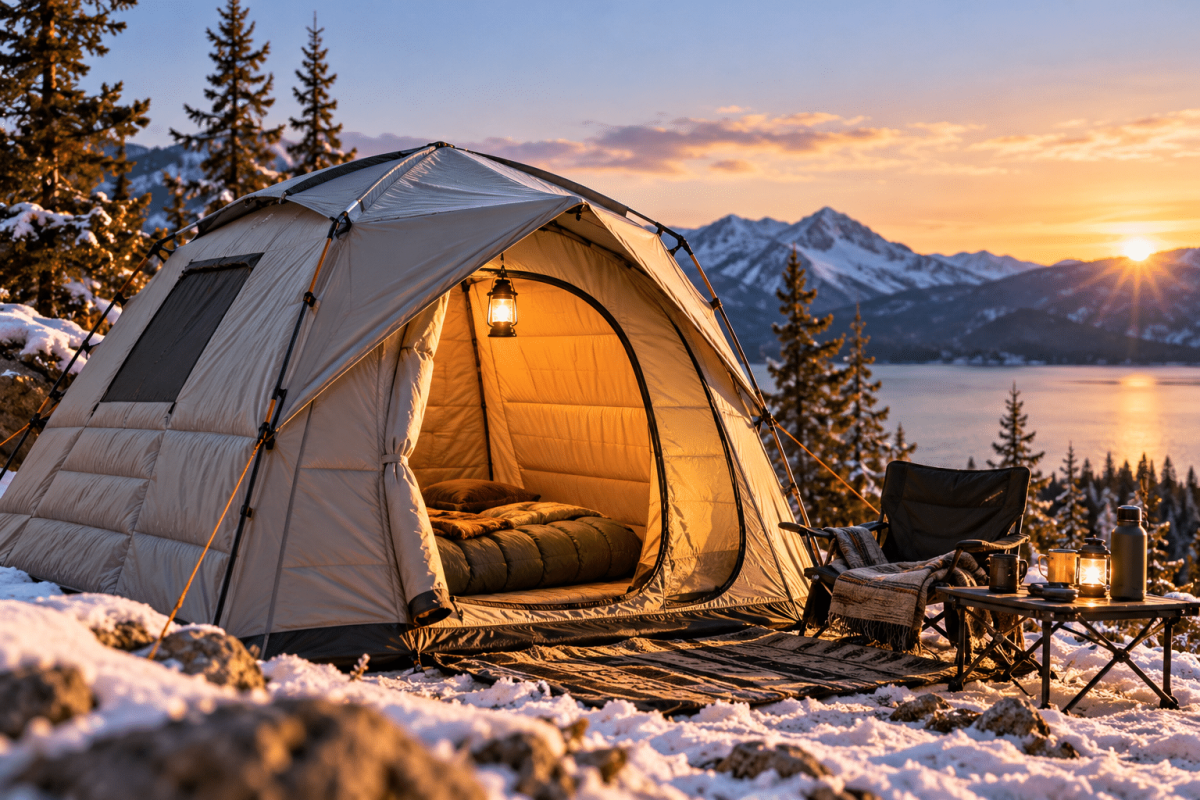
Cold-weather camping can be comfortable with the right shelter and gear. Insulated tents for camping help reduce heat loss, block drafts, and make it easier to enjoy outdoor adventures when temperatures drop. But choosing the right tent involves more than looking for thick walls or a winter-ready design.
You also need to consider insulation materials, ventilation, moisture control, ground protection, and the weather you expect to face. This guide explains how insulated tents work, the different insulation options available, and how to prepare your tent for cold-weather camping.
What Is an Insulated Tent?
An insulated tent is designed with materials or additional layers that help slow heat loss and improve comfort in cold conditions. Unlike a standard camping tent, it may feature insulated wall panels, thermal liners, or other components that reduce heat transfer.
However, insulation does not generate heat. Your body, sleeping system, and any appropriately designed heating system provide warmth. The tent helps retain some of that heat while protecting you from wind and precipitation.
Insulated tents for winter camping can be useful for stationary camping, extended outdoor stays, and certain cold-weather activities. A four-season tent is not necessarily insulated, either. Four-season designs focus on structural strength and weather protection, while thermal insulation is a separate feature that should be confirmed in the product specifications.
Types of Insulation Used in Camping Tents
Different insulation methods offer different benefits. The right choice depends on temperature, portability, moisture, and how you plan to use your shelter.
Built-In Insulation
Some tents use insulated wall or roof panels as part of their construction. These layers can reduce heat transfer and make the interior more comfortable in cold conditions.
Built-in insulation is convenient because it does not require separate liners. However, it can add weight and bulk, and its performance depends on the materials, thickness, and overall design.
Removable Thermal Liners
Thermal liners add another layer inside the tent. Depending on their construction, they can help reduce drafts and heat loss while offering flexibility across seasons.
Removable liners are useful when you want to adapt a shelter for colder weather. Check whether the liner is designed for your particular tent and whether installing it affects ventilation or access.
Insulated Wall Panels and Layered Fabrics
Some shelters use multiple fabric layers or specialized wall panels to improve thermal performance. Air trapped between layers can help slow heat transfer, provided the design manages airflow and moisture appropriately.
Do not assume that a thick fabric or double-wall construction automatically makes a tent thermally insulated. Look for verified insulation details from the manufacturer.
Reflective Insulation
Reflective blankets and barriers can reflect some radiant heat when installed correctly. Their effectiveness depends on their design, placement, and surrounding air spaces.
They should not be treated as a complete insulation system. Avoid covering vents or creating moisture traps when adding reflective materials.
Ground Insulation
The ground can draw heat away from your body, making sleeping pads particularly important during winter camping. Use a sleeping pad with an appropriate insulation rating, along with a compatible groundsheet or footprint where needed.
A sleeping bag and insulated sleeping pad often make a more noticeable difference to overnight comfort than adding extra fabric to the tent walls alone.
Insulated Tents for Winter: TentSpaces Models to Explore
TentSpaces offers several inflatable tent models, including the Ronnie 4500 L, Regina 3200, Rhonda 4350, Rene 4400, Ragan, and Reese 3600
Insulated Tents for Winter : TentSpaces Inflatable Models in Focus
Choosing a tent for cold-weather camping means balancing space, weather protection, setup, and insulation options. TentSpaces offers several inflatable tent models to explore, including the Ronnie 4500 L, Regina 3200, Rhonda 4350, Rene 4400, Ragan, and Reese 3600.
Before choosing a model for winter use, check its fabric specifications, weather ratings, ventilation features, and compatibility with additional insulation. An inflatable frame can simplify setup, but thermal performance depends on the tent’s construction and any insulation accessories used.
Ronnie 4500 L Tent : Spacious Shelter for Extended Trips
The Ronnie 4500 L is an option to consider when you need a larger shelter for outdoor adventures. Its available space may provide room for suitable sleeping equipment and additional insulation accessories, depending on the interior layout.
- Room for camping gear: Plan space for sleeping pads, insulated bedding, and essential equipment.
- Cold-weather preparation: Consider compatible liners and other insulation accessories where supported by the manufacturer.
- Setup considerations: Follow the manufacturer’s anchoring and assembly instructions for the conditions at your campsite.

The Regina 3200 is another model to consider when comparing inflatable tents for camping trips. Before using it in cold weather, evaluate its size, weather protection, ventilation, and suitability for your planned conditions.
- Camping flexibility: Consider whether its capacity suits your group and equipment.
- Insulation options: Check whether compatible thermal liners or other insulation accessories are available.
- Trip planning: Match the tent’s verified specifications to your destination and expected weather.
For campers who prioritize space and comfort, the Rhonda 4350 is worth exploring alongside the other TentSpaces models. Your choice of sleeping equipment, moisture management, and any compatible insulation accessories will influence cold-weather comfort.
- Extended outdoor stays: Consider the space needed for bedding and personal gear.
- Thermal comfort: Pair the shelter with an appropriate sleeping bag and insulated sleeping pad.
- Cold-weather suitability: Confirm the model’s construction and operating limitations before using it in freezing conditions.
When planning a family trip or group adventure, the Rene 4400 is another model to compare. A spacious interior can make it easier to organize sleeping arrangements and equipment, although a larger tent may require more effort to heat and manage moisture inside.
- Group camping: Evaluate the usable floor area and sleeping capacity.
- Sleeping insulation: Use suitable sleeping pads and bags for the expected temperatures.
- Weather protection: Check wind resistance, waterproofing, and anchoring requirements before your trip.
The Ragan and Reese 3600 models are additional options to compare when looking for a tent that fits your space and camping requirements. Consider their dimensions, packed size, and intended use before deciding which model suits your plans.
- Space efficiency: Choose a size that accommodates your group without unnecessary bulk.
- Cold-weather equipment: Prioritize a suitable sleeping system and check compatibility with any insulation accessories.
- Practical setup: Follow the manufacturer’s guidance on pitching, ventilation, and securing the tent.
No single tent is suitable for every winter environment. Before purchasing, compare the specifications of each model and confirm whether it supports the insulation accessories you need. For more guidance, read our tips for keeping tents warm in winter and explore the TentSpaces inflatable tent collection.
.
How to Choose and Set Up an Insulated Tent
The best insulated tents for winter camping are those suited to your actual conditions, not simply those marketed as winter-ready.
Consider these factors before purchasing:
- Expected temperature: Check the forecast and choose equipment designed for the conditions you may encounter.
- Size and capacity: Allow enough room for occupants and gear without selecting a shelter larger than necessary.
- Weather protection: Verify waterproofing, wind resistance, anchoring requirements, and any applicable snow-load limits.
- Portability: Built-in insulation and additional liners can increase the packed size and weight.
- Ventilation: Look for suitable vents and openings that allow moisture to escape.
Once you have selected your tent, follow these setup steps:
- Choose your campsite carefully. Look for suitable ground and protection from strong winds. Avoid avalanche terrain and locations exposed to falling branches or other hazards.
- Prepare the ground. Clear sharp debris where appropriate and use a compatible footprint to protect the tent floor.
- Add sleeping insulation. Use a sleeping pad and sleeping bag appropriate for the expected temperatures.
- Install compatible liners. Follow the manufacturer’s instructions and keep doors, vents, and emergency exits accessible.
- Secure the shelter. Use the specified stakes, guylines, and anchoring system for the terrain and forecast.
- Check everything before sleeping. Inspect the structure, ventilation openings, and signs of moisture or leaks.
For more cold-weather preparation advice, read our guide on how to keep tents warm in winter.
Ventilation and Condensation in Insulated Tents
Ventilation is essential even when temperatures are below freezing. People release moisture through breathing and perspiration, while wet clothing and equipment add more humidity to the air. When that moisture meets cold tent surfaces, condensation can form.
Excess moisture can dampen bedding, reduce comfort, and make it harder to stay warm.
To manage condensation:
- Keep the tent’s designed ventilation openings clear.
- Avoid blocking vents with insulation panels, bedding, or stored equipment.
- Dry wet clothing and gear outside the sleeping area when practical.
- Wipe away accumulated moisture and air out the tent when conditions allow.
- Follow the manufacturer’s guidance for using doors, windows, and rainfly openings in different weather conditions.
Snow and strong winds can obstruct ventilation openings, so inspect them regularly and clear them when safe. The National Park Service’s winter safety guidance explains why adequate ventilation is essential in winter shelters to prevent carbon monoxide buildup
How to Insulate a Tent: Practical Tips
If you already own a tent, a few practical additions can improve cold-weather comfort without replacing the entire shelter.
- Start with the sleeping system. Choose a sleeping bag rated for the expected conditions and pair it with an appropriately insulated sleeping pad. Keep dry base layers, warm socks, and a hat available for overnight use.
- Use a suitable groundsheet. A compatible footprint helps protect the tent floor from abrasion and moisture. It is not a substitute for a properly insulated sleeping pad.
- Reduce drafts. Pitch the tent correctly, secure its edges, and use the manufacturer’s recommended anchoring system. Avoid modifying the structure with improvised materials that could damage the fabric or create hazards.
- Manage moisture. Keep bedding dry, store wet gear separately where possible, and maintain adequate airflow.
- Plan for changing conditions. Bring extra dry clothing and suitable emergency supplies. The National Park Service’s winter backpacking checklist provides a useful starting point for preparing for cold-weather trips.
Insulated Tents vs. Four-Season Tents
Although these terms are sometimes used interchangeably, they describe different features.
| Feature | Insulated tent | Four-season tent |
| Main purpose | Reduce heat loss | Handle demanding weather conditions |
| Thermal insulation | Depends on construction and materials | Not necessarily included |
| Wind and snow protection | Depends on design and ratings | Generally designed for more challenging conditions |
| Best use | Conditions suited to its insulation and structure | Camping in demanding seasonal weather within its ratings |
Some tents may offer both thermal insulation and four-season weather protection. Always check the specifications rather than assuming one feature guarantees the other.
Limitations and Safety Considerations
Insulated tents have practical limitations. They can be heavier, bulkier, and more expensive than standard tents. Their insulation also has limits: no tent can guarantee comfort or safety in every temperature, wind speed, or snowfall condition.
Moisture management is another consideration. Poor ventilation can lead to condensation, while wet insulation and bedding may compromise comfort.
Heating equipment requires particular care. Never use a charcoal grill, camp stove, or fuel-burning device inside an enclosed tent unless the equipment and shelter are specifically designed and approved for that use. Combustion can produce carbon monoxide, a colorless, odorless gas that can be fatal. Follow the manufacturer’s instructions and applicable safety guidance.
The Centers for Disease Control and Prevention’s carbon monoxide safety guidance explains the dangers of using combustion appliances in enclosed spaces, where carbon monoxide can build up.
Also learn to recognize the signs of hypothermia, including persistent shivering, exhaustion, confusion, and drowsiness. The CDC’s hypothermia prevention guidance provides further information on cold-related risks.
Frequently Asked Questions About Insulated Tents
Are insulated tents warm enough for winter camping?
They can improve comfort, but performance depends on insulation, weather protection, sleeping equipment, and outdoor conditions. Always verify the tent’s capabilities before camping in freezing temperatures.
What is the best insulation for a camping tent?
There is no single best option for every situation. Built-in insulation offers convenience, removable liners offer flexibility, and insulated sleeping pads help reduce heat loss to the ground.
How do you prevent condensation in an insulated tent?
Keep ventilation openings clear, manage wet clothing and gear, and remove accumulated moisture. Do not seal the tent completely to retain heat.
Can you use a heater inside an insulated tent?
Only use equipment specifically approved for the shelter and follow all safety instructions. Fuel-burning appliances can cause fires and carbon monoxide poisoning. Never assume that ventilation alone makes an unsafe appliance safe.
Final Thoughts
Cold nights don’t have to mean uncomfortable camping. With the right tent, proper insulation, and good ventilation, you can enjoy the outdoors while staying more comfortable as temperatures drop. The key is choosing a shelter that fits your camping plans and the conditions you’ll face.
Ready to plan your next adventure? Explore TentSpaces’ inflatable tent collection to discover your options and find the right setup for your next outdoor escape.
Looking for the Right Tent for Your Project?
Discover a tailored tent solution built around your requirements, climate, and intended use. Our team can help you find the right specifications for your project.
Writer : Neha Verma
A note from the CEO B.Sendach:
Tentspaces is a leading tent manufacturer and a division of the Dyester Group, renowned for its exceptional craftsmanship and commitment to quality. Our extensive range of insulated tents is engineered to withstand diverse weather conditions, delivering comfort, durability, and reliable performance in even the most demanding environments. From Alaska to Australia, our tents are trusted by customers worldwide, combining innovative design, premium materials, and meticulous attention to detail to create spaces built to last
